The Science Behind Color Rendering
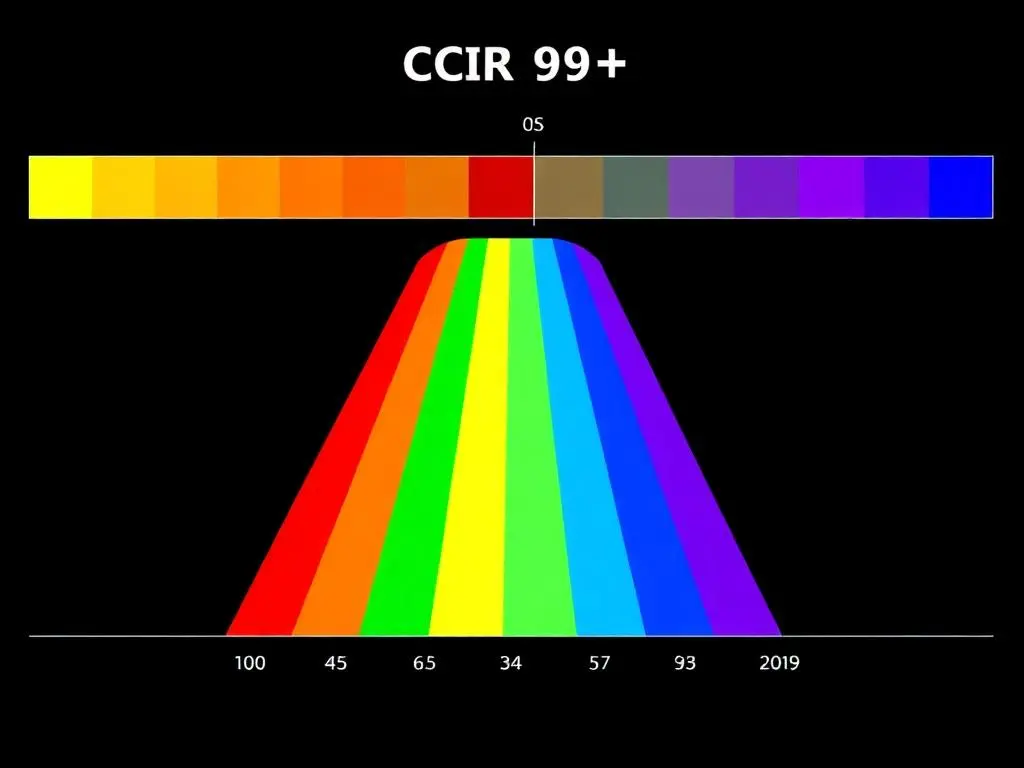
Color Rendering Index (CRI) measures how faithfully a light source reproduces colors compared to natural daylight. For B2B applications, understanding CRI is crucial for creating environments that serve their intended purpose.
#
Understanding CRI Values
The CRI scale runs from 0 to 100, with higher values indicating better color accuracy:
CRI 70-79: Basic commercial applications, warehouses
CRI 80-89: Standard offices, general retail
CRI 90-94: Quality retail, hospitality, healthcare
CRI 95-99: Museums, galleries, luxury retail, medical examination
#
Beyond CRI: The R9 Factor
While CRI averages performance across eight standard color samples, the R9 value specifically measures red color rendering:
Critical for skin tone reproduction in healthcare and hospitality
Essential for food display in restaurants and grocery stores
Important for fashion retail where fabric colors must be accurate
#
Industry-Specific Applications
##
Healthcare Environments
Accurate color perception for diagnostics
Patient comfort through natural-feeling light
Staff alertness and wellbeing
##
Retail Spaces
True product color representation
Enhanced merchandise appeal
Reduced returns from color misperception
##
Art and Museums
Faithful reproduction of original artworkConsistent viewing conditions
Conservation-safe spectral output
#
Specifying High CRI Fixtures
When selecting high CRI LED products:
Request full spectral power distribution data
Verify CRI and R9 values independently
Consider TM-30 metrics for more comprehensive analysis
Test samples in actual installation conditions